|Independent · reader-funded
Solar Power Magazine
Plug-in solar · incentives · owner-builder practice
Standing correction
The 30% federal residential credit ended 31 Dec 2025. Any 2026 quote subtracting it is wrong.
The signature beat

Eight states legalised plug-in solar. Almost nothing is certified to sell.

UL 3700 landed in December. Testing opened in January. By late July, IEEE Spectrum reported that no panels had met the new certification and exactly one microinverter had. The law arrived first. The hardware did not.

Matthew AmbsPublished Updated 12 min read
Diagram · plug-in solar topology
Plug-in solar topology and the backfeed questionA panel feeds a microinverter, which plugs into a standard 120-volt receptacle on an existing branch circuit that also serves household loads. The branch-circuit breaker does not see the combined current of the inverter and the utility feed.Module · 400 Wrailing or ground mountDC→ACmicroMicroinverterUL 3700 required120 V outletExisting branch circuit15 A or 20 AloadsOCPDbreakerpanel · meter · gridNEC 705.12(B)(1)Requires a DEDICATED overcurrent device.A shared receptacle is not one.
The governing requirement is NEC 705.12(B)(1): each source interconnection must be made at a dedicated circuit breaker or fusible disconnecting means. A receptacle on a shared branch circuit is not one, which is why states have had to legislate. The branch conductors can carry full breaker current plus inverter output, and nothing protects the conductor against the sum.

Roughly four hundred watts: the line these bills keep drawing

Colorado’s HB26-1007 caps plug-in solar at 1,920 W, the highest in the country, and has been in force since 12 August 2026. The documented lower thresholds are elsewhere: Maine self-install at 420 W, Maryland’s listing exemption at or below 391 W. Roughly four hundred watts is the line these bills keep drawing, and nobody has explained where it came from.

Analysis · Matthew Ambs

The carryforward is the only federal money left, and it is easy to lose

P.L. 119-21 left the carryforward rules alone, so unused pre-2026 credit carries forward indefinitely. The trap is the completion date: the statute counts the expenditure when the installation is finished, not when you signed.
Analysis · Matthew Ambs

Briefs

Incentives

The carryforward survived. Most coverage missed it.

P.L. 119-21 left the carryforward rules alone. Unused pre-2026 credit carries forward indefinitely.
Photo slot · Form 5695 detail
Technology

The TOPCon share everyone quotes is three different numbers

Forecasters range from 70 to 88 percent for 2025, counting different things. HJT keeps the temperature and bifaciality edge at a premium.
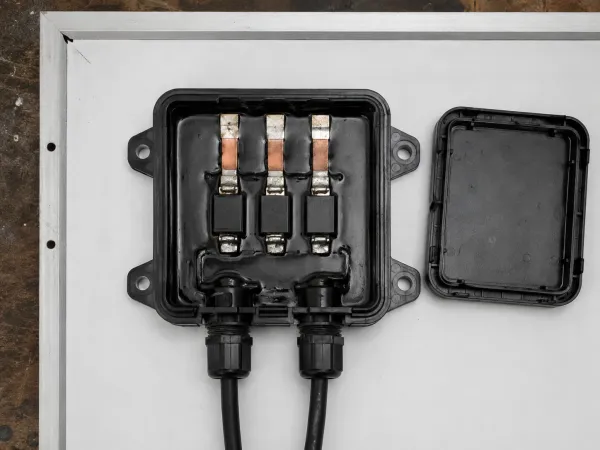
Illustration: a photovoltaic junction box on the white backsheet of a module, lid removed and set beside it, showing three ribbon tabs entering the potting compound and three bypass diodes.
Permitting

Plan sets that pass on the first submission

Spec-sheet callouts that match the cut sheets exactly, and battery documentation kept separate from PV. Each correction cycle reportedly costs $2,000 to $5,000.
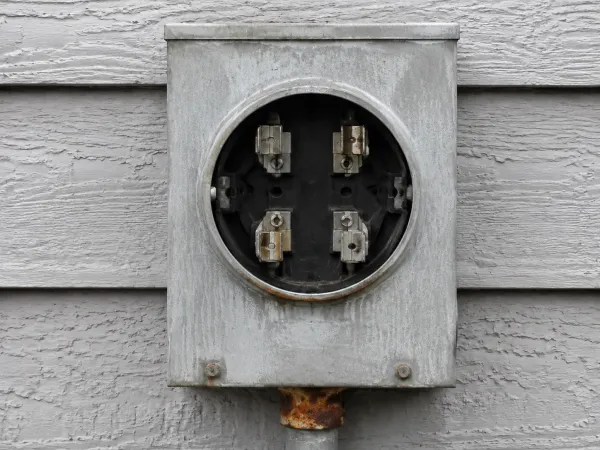
Illustration: a weathered exterior meter socket on grey clapboard siding with the meter removed, showing four jaw contacts and rust bleeding from the conduit hub below.
Storage

Powerwall 3 expansion adds capacity, not power

Expansion units run off the main unit's inverter. 13.5 kWh more energy, no additional continuous output.
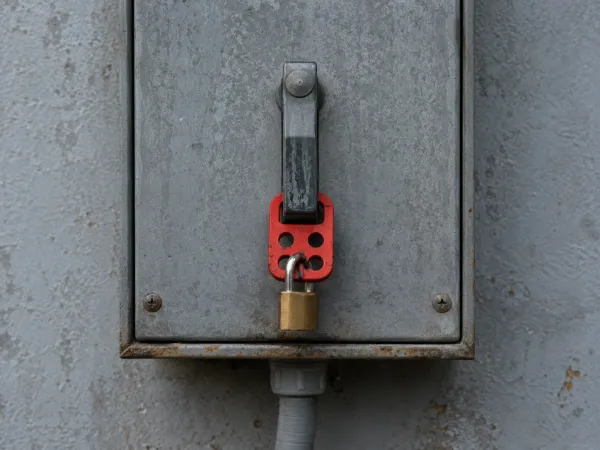
Illustration: an exterior AC safety disconnect with the handle in the off position, a red lockout hasp clamped through the handle staple and a brass padlock hung in it.
Curated · with an editor’s note

Plug In Balcony Solar Power Moves from Hack to Household

IEEE Spectrum · 24 July 2026
Why this matters

The best single piece anyone has published on this beat, and the source for the certification gap. Read it. Then read our state tracker, because the legal picture has moved twice since it ran.

Where the money went

Every figure carries its source and a verification date
Chart · SREC value by market, 2026

A twenty-fold spread across state lines

With the federal credit gone, the state column is the whole story. A reader in the District and a reader in Pennsylvania are not having the same conversation.

SREC value by market, 2026Reported SREC price ranges in dollars per megawatt-hour: District of Columbia 300 to 450, New Jersey 85 to 90 fixed, Illinois 60 to 90, Maryland 40 to 80, Pennsylvania 15 to 25.$0$100$200$300$400DC300450NJ8590IL6090MD4080PA1525$/MWh
Bars show reported ranges, not a single price. New Jersey’s SuSI figure is a fixed 15-year rate, not a market. Maryland was quoted at three different ranges by three sources; the widest is shown. Secondary sources, accessed 29 Aug 2026.
Chart · seven sources, one product

Why we won’t print a single battery price

Installed cost for the same 13.5 kWh unit, as quoted by seven sources in the same quarter. The spread is roughly two-fold. That is not a market range. That is most of them guessing.

Installed cost quoted for the same 13.5 kWh battery by seven sourcesSeven reported installed-price ranges for the same product in the same quarter, spanning 8,500 to 16,500 dollars.$8k$10k$12k$14k$16kNuWatt · equipment pageSmartEnergyUSA · blogNuWatt · cost pagePowMrHome Energy DecisionsSmartEnergyUSA · productSolarReviews · 8 marketstotal spread: $8,500–$16,500
One of these sources still applies the 30% federal credit to its net price. All accessed 29 Aug 2026. Broad agreement across the set: roughly $700–1,300 per usable kWh installed, with hardware only 40–65% of the total.

Owner-builder desk

All DIY coverage →
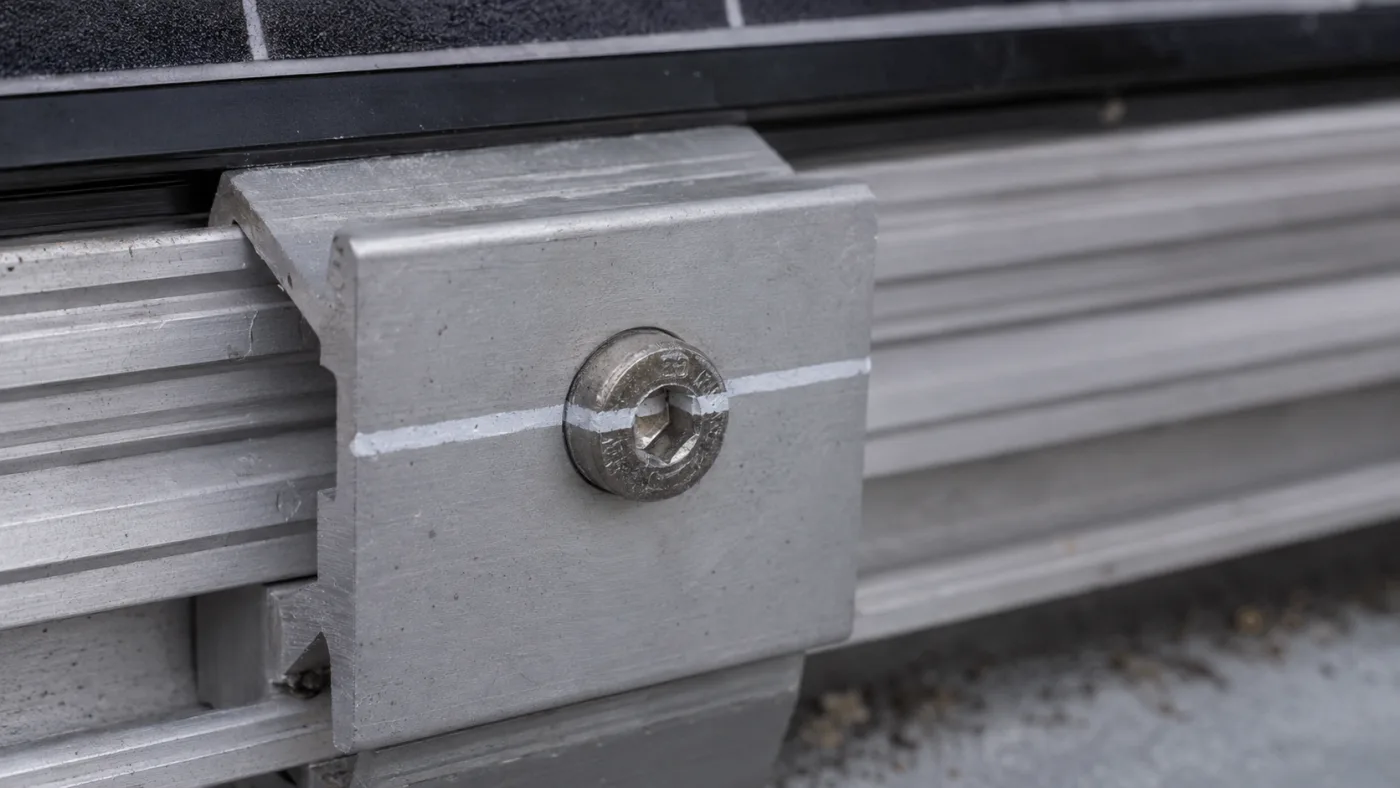
Illustration: an aluminium mid-clamp bolted to a solar mounting rail, with a white torque-marking line running across the bolt head and onto the clamp body, the two halves still aligned.
A torque mark that still lines up. The paint is applied across the fastener and its seat after checking, so a bolt that has since turned shows a broken line. Illustration

What you may not legally do yourself, state by state

In most Georgia jurisdictions a licensed electrical contractor must do the electrical work — and unlicensed DIY violates licensing law whether or not you pulled a permit. Savannah will take a notarised homeowner’s affidavit if you hold a current licence. Maryland lets you own the project but requires a master electrician licensed in that county. Montgomery County’s fast permitting lane requires a licensed contractor, which means it is closed to you.

Guide · updated as jurisdictions are confirmed

SolarAPP+ is in 300+ jurisdictions. Most won’t let you use it.

Approval in under 24 hours where it applies, and packages reportedly clear about 14.5 business days faster. Eligibility is another matter: residential only, licensed contractor, and hard caps at 400 A service.

Two permits, one interconnection, and where the weeks actually go

Building permit, electrical permit, interconnection agreement, final inspection, permission to operate. A permit-service vendor puts each correction cycle at $2,000–5,000 — read that as vendor-interested, but directionally right.

Analysis · 2,600 words

Lease or buy, when the credit only goes to the owner

Third-party ownership survived the repeal. A provider can still claim the commercial credit and may pass some through as a lower rate. But signing a lease frequently disqualifies you from state incentives, because you no longer own the system. Almost nobody is writing about this trade honestly.

Explainer · net metering

Under net billing, the kilowatt-hour you don’t export is worth four times the one you do

California moved exports from roughly retail to roughly five to eight cents while imports stayed at thirty to fifty-five. That single change turned storage from a resilience purchase into an economic one, and made self-consumption the whole game. Three more states are named in an SEC filing as heading the same way.

In progress

The eleven states where plug-in solar stalled

Utility pushback, union opposition, ordinary gridlock. We have the count secondhand and will not print the state list until we have the committee records.

Expected Sept 2026

Cell, module, lab: how to read an efficiency claim

The best shipping commercial module we could document is 25.91%. The best certified cell is 28.13%. The best laboratory tandem is 35.5%, ESTI-certified in July. Those are three different things and only one of them is for sale.

TOPCon won. What that means on your roof.

Roughly 80% of new cell capacity by end-2025. HJT keeps the temperature-coefficient edge, at a 15–50% premium.

The IEC stamp that can void a rebate

Ask for the certificate, not the datasheet. Check the standard year, and that the model number matches.

Section 25D was terminated, not tapered

Thirty percent to zero on 1 January 2026, roughly seven years earlier than the IRA schedule. The timing rule is the trap: the statute counts the expenditure when the installation is completed, so a December contract bought nothing. The carryforward survived untouched.

20×spread between the best and worst SREC market — DC against Pennsylvania
75%cut in California export value under NEM 3.0, against imports still at $0.30–0.55
22/51state incentive pages written — the rest carry noindex until verified
Curated
24 Jul 2026

Plug In Balcony Solar Power Moves from Hack to Household

IEEE Spectrum
Curated
12 Aug 2026

SolarEdge annual report flags net metering under scrutiny in three states

SEC filing